

How to Choose an Effective Red Light Therapy Device for home use Without Falling for Scams
Red light therapy devices can look impressive online. A sleek panel, a glowing red photo, a few before-and-after claims, and suddenly a $700 purchase feels scientific. The problem is that many product pages use technical language without giving the numbers that actually matter.
Red and near-infrared light therapy, often called photobiomodulation, has a growing body of research behind it. Studies suggest it may help with certain uses, such as skin appearance, muscle recovery, joint discomfort, and wound healing support. But results depend heavily on the device, the dose, the distance, and the treatment routine.
This guide will help you judge a device with a clear eye. It is informational only and is not medical advice. If you have a medical condition, take light-sensitive medication, are pregnant, or plan to use light therapy after a procedure, ask a qualified clinician first.
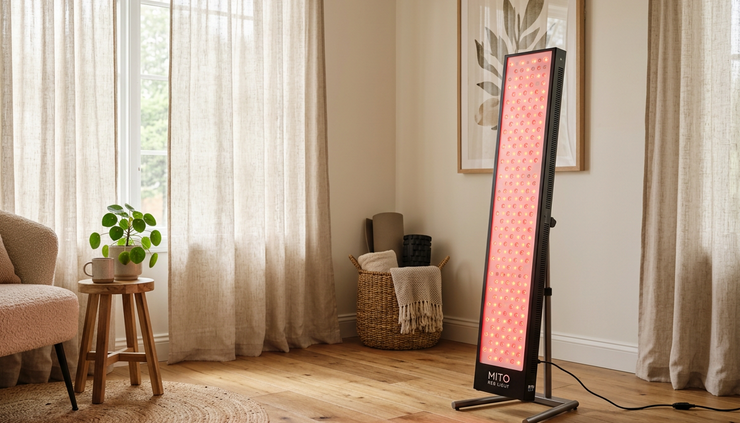
Start with wavelength because not all red light is the same
The first spec to check is wavelength, measured in nanometers, or `nm`. This tells you the color or type of light the device emits.
Most legitimate red light therapy devices use wavelengths in two broad categories.
Light type | Common range | Why it matters |
Red light | About 630 to 660 nm | Often used for skin-focused goals because it does not penetrate as deeply |
Near-infrared light | About 810 to 850 nm | Often used when the target is deeper tissue, such as muscles or joints |
Mixed red and near-infrared | Often 660 nm and 850 nm together | Common in larger panels for general home use |
A device does not need every wavelength to be useful. In fact, more is not always better. A product with 660 nm and 850 nm LEDs may be more credible than one boasting “full-spectrum healing light” without exact numbers.
Be cautious with vague labels such as:
“Therapeutic red spectrum”
“Medical wavelength technology”
“Salon-grade light”
“Bioactive light energy”
Those phrases may sound impressive, but they do not replace actual wavelength data.
Product pages should list exact wavelengths, ideally with a tolerance range. For example, a device may list `660 nm ± 10 nm`. That tells you the manufacturer understands the spec and is willing to state it clearly.
If a product does not list wavelength at all, skip it.
Power output matters, but only when it is measured honestly
Wavelength tells you what kind of light the device emits. Power output tells you how much light reaches your body.
This is where many brands get slippery.
The most useful number is irradiance, usually measured in `mW/cm²`. It describes the light intensity at a specific distance from the device. A serious brand should tell you something like:
Irradiance at 6 inches
Irradiance at 12 inches
Irradiance measured by a third-party lab
Whether the measurement includes red light, near-infrared light, or both
A less useful number is total electrical wattage. A product may say it is a “300W panel,” but that often refers to maximum theoretical LED rating or wall power, not the actual light delivered to your skin. Two devices with similar wattage can perform very differently.
The treatment dose is usually described in joules per square centimeter, or `J/cm²`. You do not need to become a physicist, but the basic idea helps:
Dose depends on intensity and time. More power does not automatically mean better results.
A simple formula is:
`mW/cm² × seconds ÷ 1,000 = J/cm²`
So if a device delivers 50 mW/cm² at your treatment distance and you use it for 120 seconds, the dose is about 6 J/cm².
That does not mean 6 J/cm² is always the right dose. Different goals may use different ranges in studies. The point is that real devices should make dose planning possible. If the brand gives no irradiance data and only says “use for 10 minutes,” you cannot tell how much light you are actually getting.

Read product specifications like a buyer, not a fan
Good product specifications answer practical questions. Poor ones create a fog of big claims and half-measurements.
Look for these details before buying.
Exact wavelengths
The listing should name each wavelength in nanometers. Common examples include 630 nm, 660 nm, 810 nm, 830 nm, and 850 nm.
Irradiance at a stated distance
A useful spec says how much light reaches the target from a real distance, such as 6 inches or 12 inches. If the brand claims very high irradiance, look for third-party testing.
Treatment area
A small wand may work for a targeted spot. A large panel makes more sense for the back, legs, or full-face use. A tiny device is not automatically weak, but it should not be marketed as full-body coverage.
Beam angle
LEDs spread light. A narrow beam may feel stronger in a small area. A wider beam may cover more skin but lose intensity faster with distance.
Flicker and electromagnetic field claims
Some brands mention low flicker or low EMF. These may be helpful quality details, but claims should be measured at realistic treatment distances. Treat vague “zero EMF” statements with caution.
Cooling and build quality
High-output LEDs create heat. Good panels usually have heat sinks, fans, or other cooling design. Overheating can shorten lifespan and reduce performance.
Warranty and return policy
A brand willing to stand behind a product should offer clear warranty terms and a reasonable return period. Read the exclusions. Some warranties sound long but cover very little.
Check whether the claims match the science
A trustworthy brand does not need to promise miracles. It explains what the device is designed to do, cites relevant research, and avoids turning early findings into guaranteed outcomes.
Research on red and near-infrared light has been studied for several uses. Still, results vary by wavelength, dose, treatment schedule, skin type, condition, age, and other factors. Home devices are not the same as clinical equipment used in studies.
Be skeptical when a product claims to:
Cure chronic disease
Melt fat without lifestyle changes
Reverse aging in days
Replace medical treatment
Work for every condition
Deliver permanent results with no maintenance
Also pay attention to how research is used. A brand may cite a study using a clinical laser at a specific dose, then sell an LED mask with very different output. That does not prove the mask is useless, but it does mean the evidence is not a direct match.
A stronger research-backed device page will explain:
Which wavelengths the research used
What outcomes were studied
How often treatments were done
Whether the device can deliver a similar dose
The limits of current evidence
If a brand links to general articles but never connects the research to its own specs, the science section may be more decorative than useful.
Brand reputation and customer reviews can reveal patterns
Reviews are helpful, but only if you read them with a filter. A five-star average does not tell you much by itself.
Look for patterns across many reviews. Do customers mention consistent build quality, clear instructions, helpful support, and realistic results over time? Or do reviews focus mostly on fast shipping and nice packaging?
The most useful reviews often come from people who describe:
How long they used the device
What distance and time they used
What goal they had
Whether they had any side effects
How customer service responded to issues
Be careful with review sections where every comment sounds similar. Also watch for products with a flood of perfect reviews but no detailed criticism. Real products usually have a mix of feedback. Even excellent devices may receive complaints about size, brightness, fan noise, setup, or price.
Search beyond the brand’s website when possible. Retailer reviews, wellness forums, independent comparisons, and long-term user comments can help you see whether the company handles problems well.
Good signs include:
Clear company identity
Accessible customer support
Transparent warranty terms
Replacement parts or accessories
Manuals that explain safe use
No pressure-based sales tactics
Bad signs include:
No physical company information
Copied product photos from other listings
Constant countdown timers
Huge discounts that never end
Claims that sound too broad to be true

Compare price by value, not by sticker shock
Red light therapy devices range from inexpensive handheld tools to large full-body panels. Price alone does not tell you whether a product is good. The better question is whether the device delivers the right light, over the right area, with enough quality and support to justify the cost.
A cheap device may be a good buy if it lists exact wavelengths, has honest output data, and suits a small treatment area. A pricey panel may be worth it if it covers more of the body, has strong tested irradiance, uses quality components, and comes from a reputable brand.
Compare devices using these value factors.
Factor | Why it affects value |
Treatment area | Larger coverage can reduce session time |
Tested irradiance | Verified output is more useful than marketing wattage |
Wavelength match | The device should fit your goal |
Build quality | Better heat management may improve lifespan |
Warranty | Strong coverage lowers purchase risk |
Return policy | Helps if the fit, brightness, or use routine does not work for you |
Accessories | Stands, goggles, timers, and mounting kits may add real value |
A common trap is paying more for unnecessary extras. Bluetooth controls, apps, trendy names, and luxury packaging do not make light more effective. They may improve convenience, but they should not replace the fundamentals.
The best purchase is usually the device that fits your actual use case. For facial skincare, a quality mask or small panel may be enough. For back, hip, or leg use, a larger panel may be more practical. For travel, portability may matter more than maximum output.
Learn the common scam signals before you shop
Scams and low-quality products often follow the same pattern. They lean on emotion, urgency, and vague science.
Watch for these red flags.
No exact wavelength listed
If the product cannot tell you what light it emits, it is not worth buying.
Only wattage is advertised
Electrical wattage is not the same as therapeutic light output. Look for irradiance at a stated distance.
The device claims to treat everything
Broad cure-all claims are a major warning sign, especially for serious medical conditions.
Before-and-after photos do all the selling
Photos can be staged, edited, taken in different lighting, or borrowed. They should not replace specifications and research.
The brand misuses FDA language
In the United States, some low-risk wellness devices may be registered or cleared for certain uses. Registration does not mean the FDA has proven every marketing claim. Read the wording carefully.
The discount seems fake
A “$999 device marked down to $89 today only” may be priced to create urgency rather than reflect real value.
No manual is available
A legitimate light therapy device should come with safety instructions, suggested starting times, eye guidance, contraindications, and care directions.
Build a simple buying checklist
Before spending money, run the device through this quick checklist.
Does it list exact wavelengths in nanometers?
Does it provide irradiance in `mW/cm²` at a stated distance?
Does it explain suggested treatment times based on output?
Does it have a realistic treatment area for your goal?
Does the brand cite research that matches its technology?
Do customer reviews mention long-term use, not just delivery?
Is the warranty clear and easy to understand?
Are return terms fair?
Does the product avoid cure-all claims?
Can you contact customer support before buying?
If the answer is “no” to several of these, keep looking.
A good device is transparent before it is impressive
The best red light therapy device is not always the most expensive one or the one with the boldest claims. It is the one that gives clear specifications, uses plausible wavelengths, provides honest power data, supports its claims with relevant research, and comes from a brand that treats customers well.
When a product page is full of glowing promises but short on numbers, walk away. When the specs are clear enough that you can understand the wavelength, output, distance, dose, and warranty, you are in a much better position to buy with confidence.
Choose the device that matches your goal, your space, and your budget. Let evidence guide the purchase not the hype.
True medical grade red light devices are usually outside of the average consumers budget. This article is geared towards at home devices only.

Comments